Teaser:
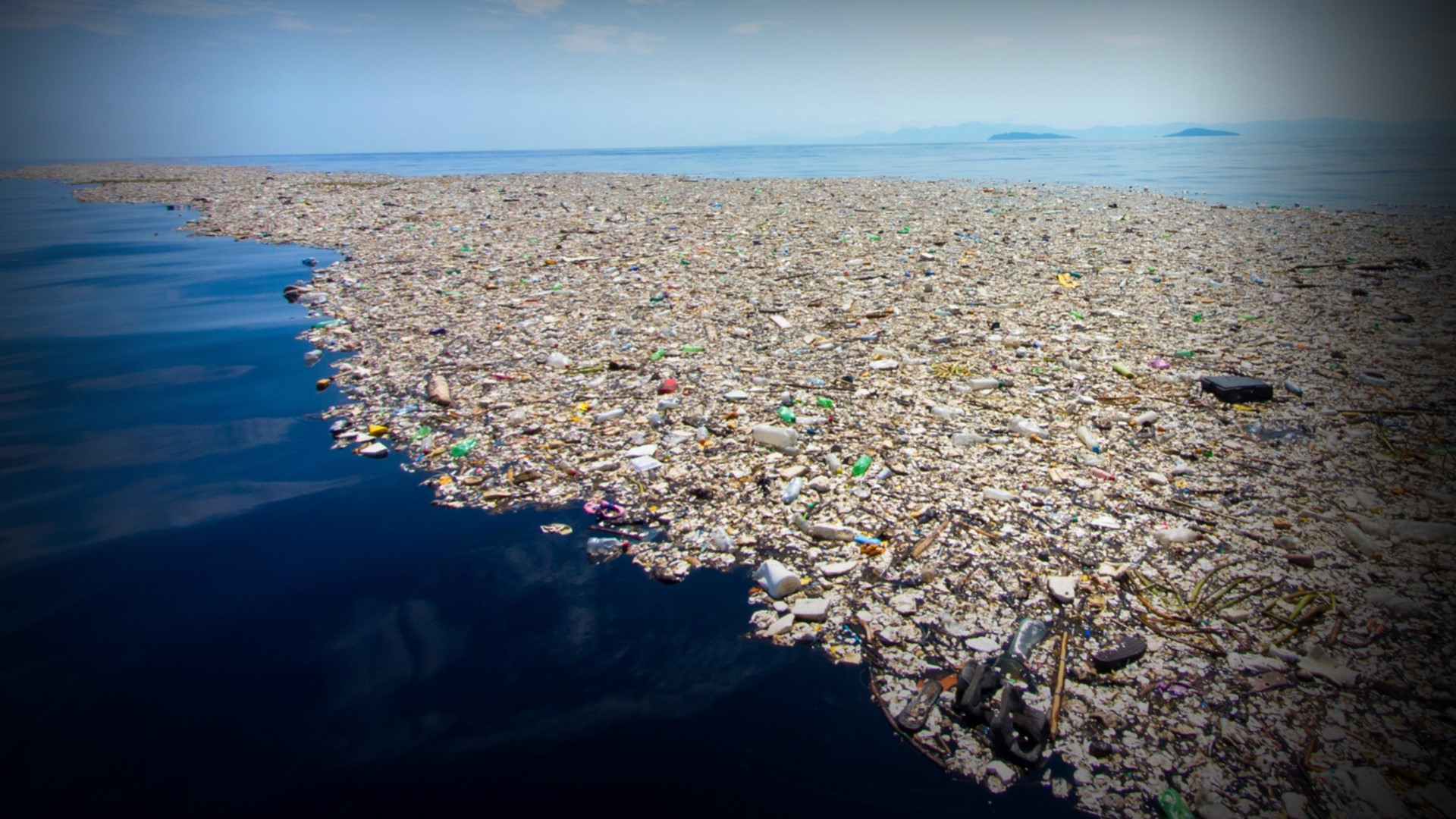
Plastic is very resistant and difficult to dispose of. Usually it takes 450 years until it has decomposed into partially toxic chemicals. These get into the water and so into the entire food chain. Every year, 300 million tonnes of plastic are produced.
For example, the fish eats the plastic and later we eat these fish.
Quiz question:
How many percent of the plastic produced each year ends up directly in the ocean?
Vocabulary:
toxic chemicals - giftige Chemikalien
decomposed - zersetzt
Team: Brian & Lara
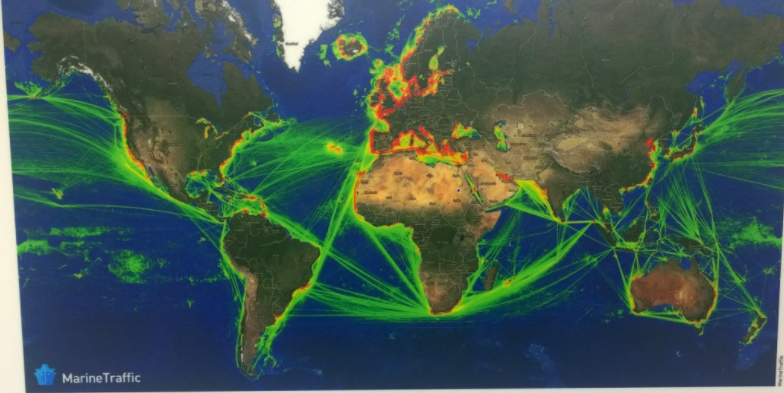
Our topic is about transport. There are many ways of transport. The most important one is the transport by sea, it covers up almost 50% of crude oil and 80% of global merchandise. As a result there are also many problems such as pollutants and noise.
How can you get rid of these problems and are they opportunities to improve transport overall to make it more eco-friendly?
Quiz question: What source for transport can be used at sea (only one is correct)
- wind power
- heat
- pedals
Vocabulary:
global merchandise = alle Güter der Welt
pollutants = Schadstoffe
Team: Angela und Sandrina
Source: Focus Terra I (sway.office.com)
Our previous posts, where we defined our questions, ideas and goals, are the base of our project and therefore we are going to build on these.
The best option for us is to create a survey. Through surveys you can reach way more people to share their experience with us than through interviews, where in most cases only a few people are interviewed. Surveys are quick, easy and accessible to anyone, even internationally if it is circulating properly.
We are currently working on our survey, all questions we want to include in it are written down now. But there is a challenge coming up for us: Our relatives, who are part of our project, do not speak german nor english, so we have to translate it to croatian and albanian, so they can answer them accurately.
We really hope that our upcoming survey is going to give us a collection of new impressions and insights to our project topic.
We are planning on meeting our collaboration partners via WhatsApp-call sometime next week. Sadly it is not possible for us to do a group-call because our collaboration partners (aka relatives) don't speak the same language, so they aren't able to exchange their experiences revolving around plastic waste in the country they live in among eachother. It surely would have been interesting, but always having to translate what each party says, is too demanding and would probably end up in a chaos. The consequence from this for us both, Liranda and Angela, is that we have to contact/call them separately. But thanks to that, it shouldn't be too hard for us to fix an appointment.
For now, we've decided on meeting them once. It is not necessary to contact them weekly, but maybe monthly. We'll just decide spontaneously, depending on how the situation is.
We have now defined all the basics roughly as you can see from our previous posts, to build on them. We are aware of which research questions are at the center, what we want to determine and investigate and with which methods we will use. We also know which collaboration partners we are going to work with. We have selected some websites that serve as sources of information.
However, we don't have many results yet. But since the basics are in place, we will develop more and more valuable insights step by step. We have already prepared a survey that still has to be approved by our teacher. Once it's approved, we'll have as many people as possible answer it, which will give us a lot of answers and results quickly. We can turn the results of the survey in diagramms and tables. We are also planning intervies with our collaboration partners, which will surely provide us with text or maybe even audio. We want to take pictures ourselves in switzerland and ask our collaboration partners if they can also take and send some pictures.
These many results (and hopefully many more that we can still work out and consider) help us to create a succesful project.
For the survey we considered the following questions:
1. How much water do you drink per day?
2. Do you drink tap water?
3. Which are the countries where you think people can’t drink tap water?
These are open questions. We are curious to see what the answers will be.
4. Do you buy your drinking water in the store?
There are people who can’t drink tap water and have to buy it in the store. We are curious to see how many people have to buy it.
5. Do your drinking and your showering water come from the same source?
6. Do you have any idea about how to improve the quality of tap water in other countries?
7. Where do you think our tap water comes from?
These questions aim at finding out if people know where their tap water comes from.
8. According to which criteria do you evaluate good tap water?
9. Do you filter the tap water before you drink it?
There are people who filter their tap water before they drink it. We want to know if this also applies to the people answering our survey :)
10. On a scale 1-5 how important is clean tap water to you?
We hope for our survey to be successful and informative!
Sandrina and Emina
At the moment we are still in the process of planning our project. In the future we will have contact with our collaboration partners via Zoom and email.
Our collaboration partners are two students from Kerala.
The next step will be a survey with our collaboration partners to get a first impression of the water scarcity in Kerala.
Vision:
We want to do a survey with students in Kerala. With the survey we want to find out how the water scarcity is in Kerala. We want to include the results in our project. After that we compare the water scarcity in Kerala with in the canton of Zurich.
We hope that our project will generate emotions in other students and that they will take the issue to heart.
Imagination:
We would be happy if the readers of our project are inspired to join an organisation that deals with the issue.
Concept for water scarcity:
Names of collaboration team members (Who?):
Team from canton of Zurich (Switzerland): Brian & Lara
Team from Kerala (India): 2 students from Kerala (India)
Our research questions:
- Where does the water in canton of Zurich and Kerala come from?
- Is there a water scarcity in canton of Zurich and Kerala? If so, how big?
- What are the main causes of water scarcity in canton of Zurich and Kerala?
- How do Kerala and canton of Zurich react when they run out of water?
- Are there any ideas for solutions to the water scarcity in Zurich and Kerala?
- Where is clean water available Kerala and canton of Zurich?
Where do we find answers to our questions?
- Exchange with the students from India
- Research in the internet
- Exchange with people from our surroundings
Our goal:
We want to show how water scarcity is in Kerala (India) and how it is in Switzerland? We also want to find out how the two villages react when they have no more water.
We want to show how topical the issue of water scarcity is and get other students thinking about it.
From Brian & Lara